

Consider the Pear Tree
There is a tree I did not plant that has taught me more about generosity than any vine I’ve tended.

I usually do not share again so soon after my weekly post, but I felt urgent, and this got squeezed almost by simply yielding, from my fingers this morning.
It’s a bit of prose for you. I recommend tea while you read.
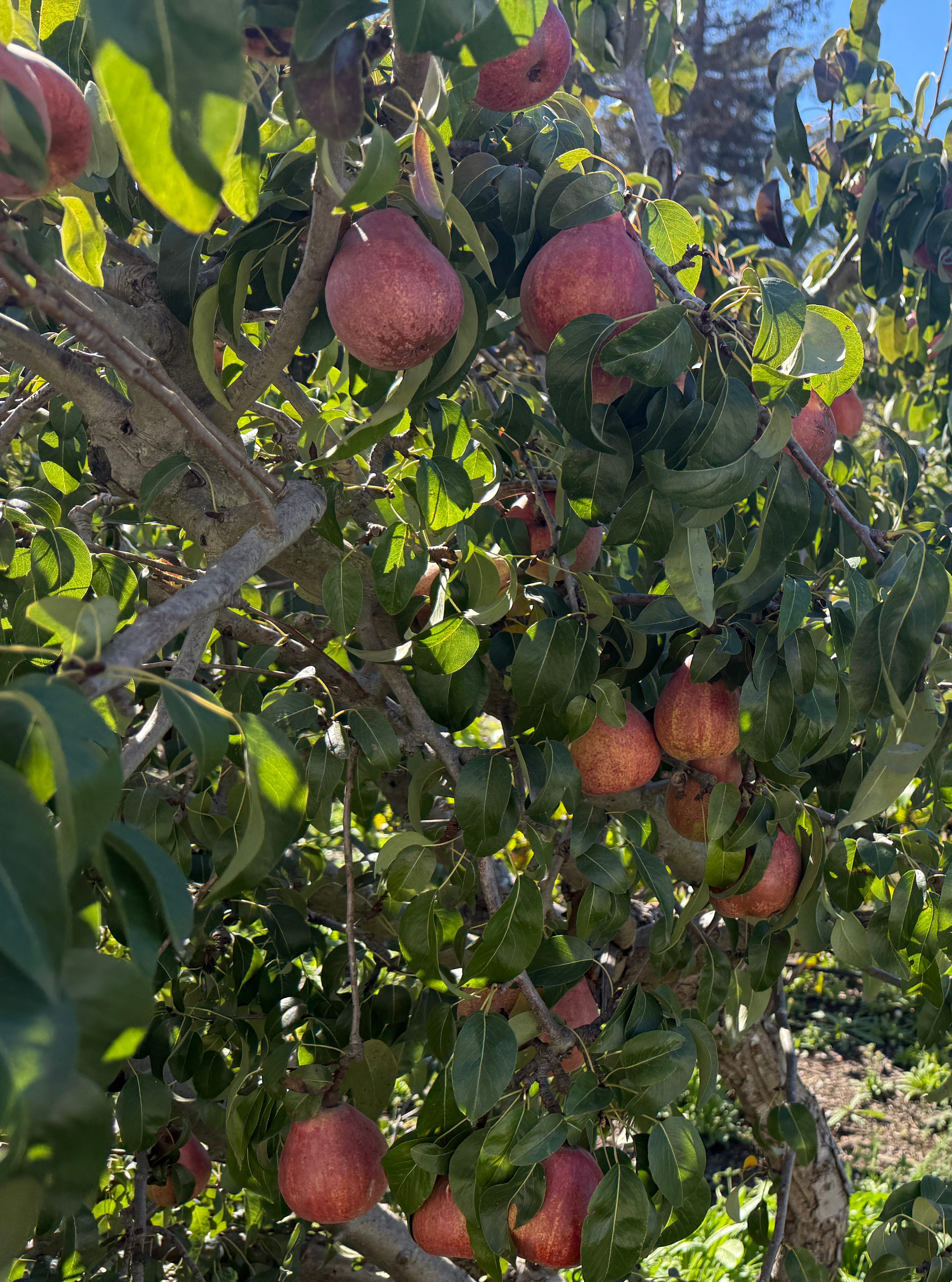
It stands at the edge of my vineyard in Sonoma, neither wild nor entirely domesticated, much like myself, in fact. It came with the stewardship of the land, like an inheritance from someone who understood that we do not live by wine alone.
Twenty dozen pears. I counted them last week, disbelieving, moving through the October morning with a wheelbarrow and a growing sense of wonder. The fruits, nearly perfect, hang like burgundy lanterns in the slanted light. How does one tree hold such abundance? What ancient mathematics governs the transformation of blossom to weight, of promise to flesh?
The vines, they demand everything. They require the precise calibration of desire and restraint, the severe pruning that says no to abundance in service of concentration. Each cluster must earn its place. I prune ruthlessly, calculate, measure sugars and acids, and the slow accumulation of phenolics that will, if we are patient and lucky, become something worth remembering. This is the work of the vintner: to partner with scarcity, to make a little become enough.
But the pear tree knows a different story.
She gives and gives and gives, and when you think she has given all, you walk around to her southern side and discover another dozen you had somehow missed, half-hidden in the canopy like a secret she was saving. There is something almost embarrassing about this plenty, this unapologetic fecundity. In a culture that valorizes scarcity and makes us earn our sweetness, the pear tree stands as a quiet heresy. I think I can hear her playfully mocking me from here.
I have learned to read her now, after nearly a decade of watching. In spring, she is a riot of white blossoms that the bees attend like supplicants at a shrine. The petals fall like snow onto the vine rows, and I used to worry about this at times, this beauty on the ground. But the tree does not count her blossoms. She scatters them with the confidence of one who knows that some extravagance is necessary for life to continue.
By summer, the small green knots of forming fruit begin to weigh the branches. This is when I start to worry, will they hold? They bend over, the lower ones nearly touch the earth. Should I thin them, apply the vintner’s logic of less-is-more? But I have tried this, and the tree responds by simply making the remaining pears larger, as if to say, "You cannot trick me into smallness." I will fill the space you give me.
Come September, when the grapes are approaching their own moment of truth, the pears begin their metamorphosis from green to gold to that particular shade of burgundy-red that catches the afternoon light and holds it.
The first time I bit into one, still warm from the sun, juice running down my chin, I understood why M.F.K. Fisher wrote that hunger is not just about food. This was the taste of place, of Sonoma’s mineral-rich soil and foggy mornings and hot afternoons. But it was also the taste of time, nearly a decade of this tree putting down roots deeper than I could imagine, drawing up something essential and offering it back transformed.
David Whyte writes about the conversation we are always having with the world, the one where we ask our questions and the world answers not with words but with presence. The pear tree is my most faithful conversant. I talk to the vines about structure and balance, about aging potential and market preferences. But with the pear tree, the conversation is simpler: she gives, I receive. I share, she gives again.
There is an old story, Martin Shaw might tell you, about a tree at the center of the world that bears fruit for all who come hungry. In the myth, the tree is always abundant, never depleted, because it is rooted in a source that cannot run dry. Standing beneath my tree lover in late September, arms full of fruit, face sticky with sweetness, I think maybe such trees are not confined to myth. Maybe they are simply paying attention to something we have forgotten in our careful calculations and controlled yields?
The pears pile up in the wheelbarrow, golden ones and rose-blushed ones and those that have gone full burgundy, nearly purple in the depths of their coloring. They are not perfect, though I said earlier they are nearly so. Some have blemishes, small marks where a branch rubbed or an insect visited. Some are asymmetrical, following their own logic of form. But their imperfection is part of their perfection, if you can hold that paradox.
They are real in a way that the uniform fruit in the supermarket can never be.
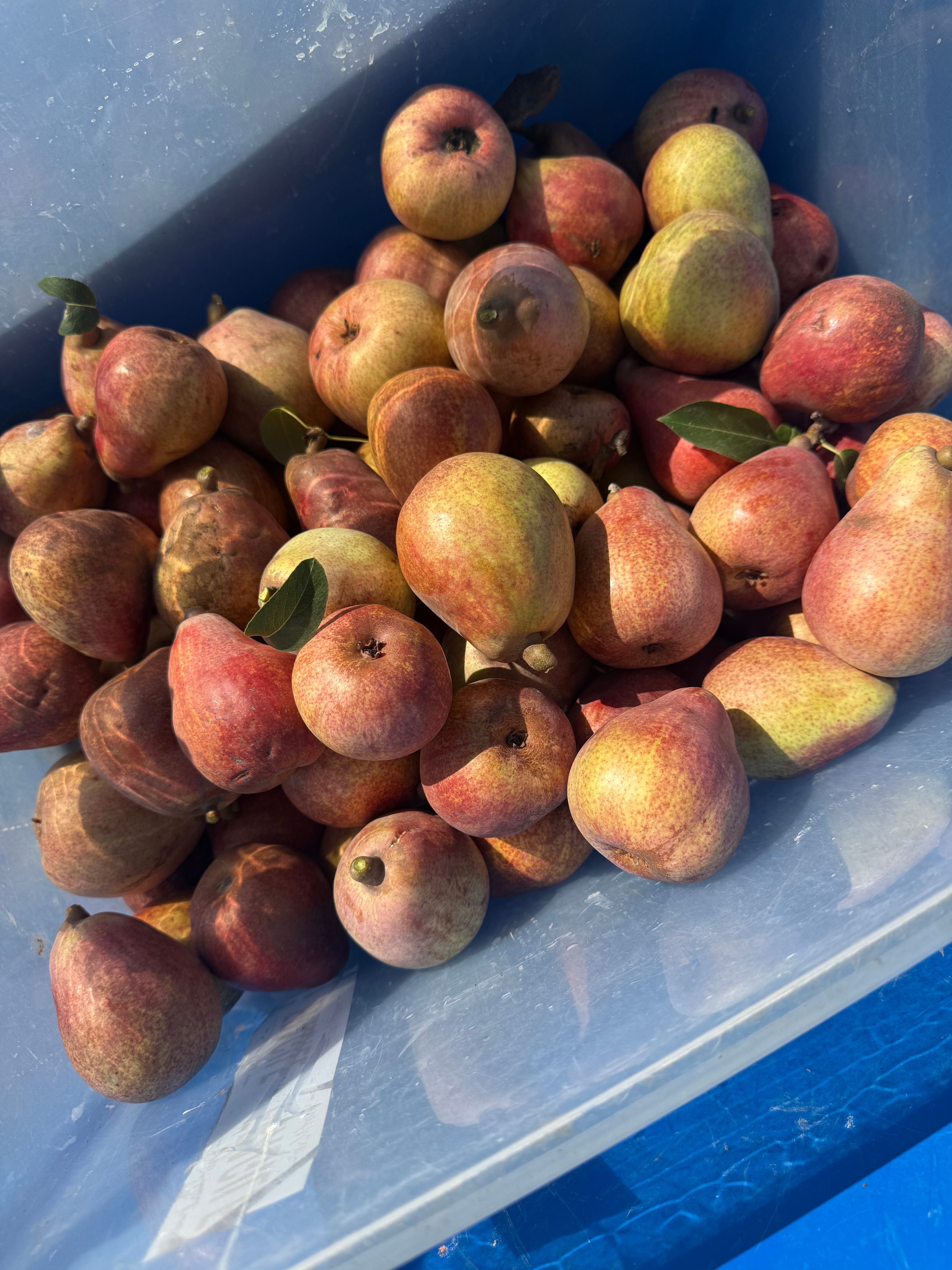
I give them away constantly. Neighbors, friends, the woman at the farmers market who sold me tomato starts, the postal carrier who brings my packages up the driveway. “Do you like pears?” I ask, already knowing the answer doesn’t matter because I have so many that I cannot not share them. And in the giving, I am changed. The tree teaches me that abundance is not something to hoard but to circulate, that generosity begets generosity, that there is always enough.
Some I used to preserve, pear butter, pear sauce, pears in syrup with vanilla and star anise. I line them up in jars in my pantry, small monuments to October’s plenty, insurance against February’s scarcity. But even this feels like a hedge against the tree’s lesson. She does not save for later. She gives now, lavishly, trusting that next year will bring its own abundance.
The vines have taught me about terroir, about how a plant can express the essence of a place through fruit that becomes wine. But the pear tree teaches me about character, not the character of place, but the character of generosity itself. She is not trying to be complex or age-worthy or win awards. She is simply, profoundly, herself: a bearer of sweetness, a giver of abundance, a reminder that some things in life are not scarce.
At night, when the work of harvest is done and I sit with a glass of last year’s wine, I can see her silhouette against the darkening sky. The branches bow under their burden of fruit, and I think about how strength is sometimes measured not in standing upright but in the capacity to bend, to bear weight, to offer oneself again and again. I think about the poem I wrote several years ago about my desire to be a hardwood for my family, and it’s such a contrast to her malleable, pithy branches. It’s in her flexibility that she shines, not in hard obstinacy, and there is a lesson for me.
Twenty-one dozen pears from one tree. It still astonishes me. It probably always will. In a world that teaches us to carefully ration our gifts, to protect ourselves from depletion, to measure and calculate and ensure we get back what we give, the pear tree stands as radical testimony to another way. She suggests that perhaps we have more to give than we know.
That perhaps generosity, far from depleting us, might be what makes us whole.
This is what I have learned in eight years of living beside a pear tree: that abundance is not something we achieve through control, but something we allow through surrender.
It is that the work of cultivation is not only about imposing our will on the land, but about learning to recognize and receive the gifts the land is already offering. That sometimes the most important tree is the one we did not plant, the one that was waiting for us to arrive and learn its lesson.
And the lesson is simple, really, though it takes a lifetime to understand: Give fully. Give abundantly. Give without counting. The world is hungry, and you, like the tree, have so much more to offer than you know.
We grow weary of the constant assault on our lives now. This is our peace and solace: sit with her and speak gently, as I did, where you are. With your pear tree (even if it’s a person).
What are the trees in your life that have taught you about abundance? What lessons have you learned from the plants that give without calculation?
Until We Eat Again!
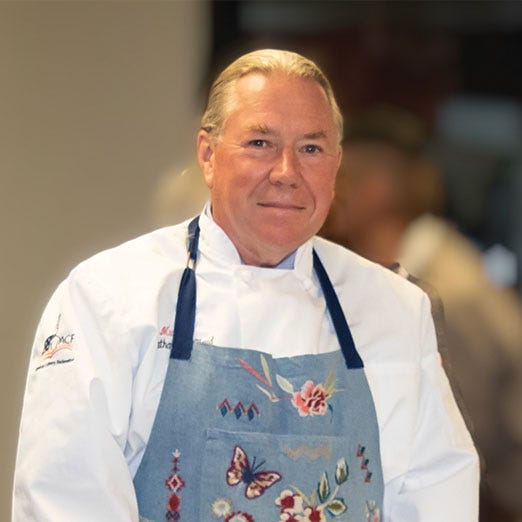
Jonathan McCloud, M.A.
Author, THRIVE!

What lush poetry Jonathan. I have been the grateful recipient of some of those pears. Thank you tree- and you.
this was, as Lissa said below, bare pear poetry!! my favorite fruit in the world.... have you dried them? and then reconstituted them in a liquor to complement their sublime sweetness?
there is a ravine on the north side of my house- no fruit trees, big leaf maples, cedars, first, it draws me out of my Self so far that I can be of my Self without bias. I meet Quan Yin there. and the next time I sit gazing into it's changing sunlit dapples I will eat a pear and remember what you have written here....