

Learning to Love What Bites Back
On acquired tastes, digestive rebellion, and refusing the sugar trap

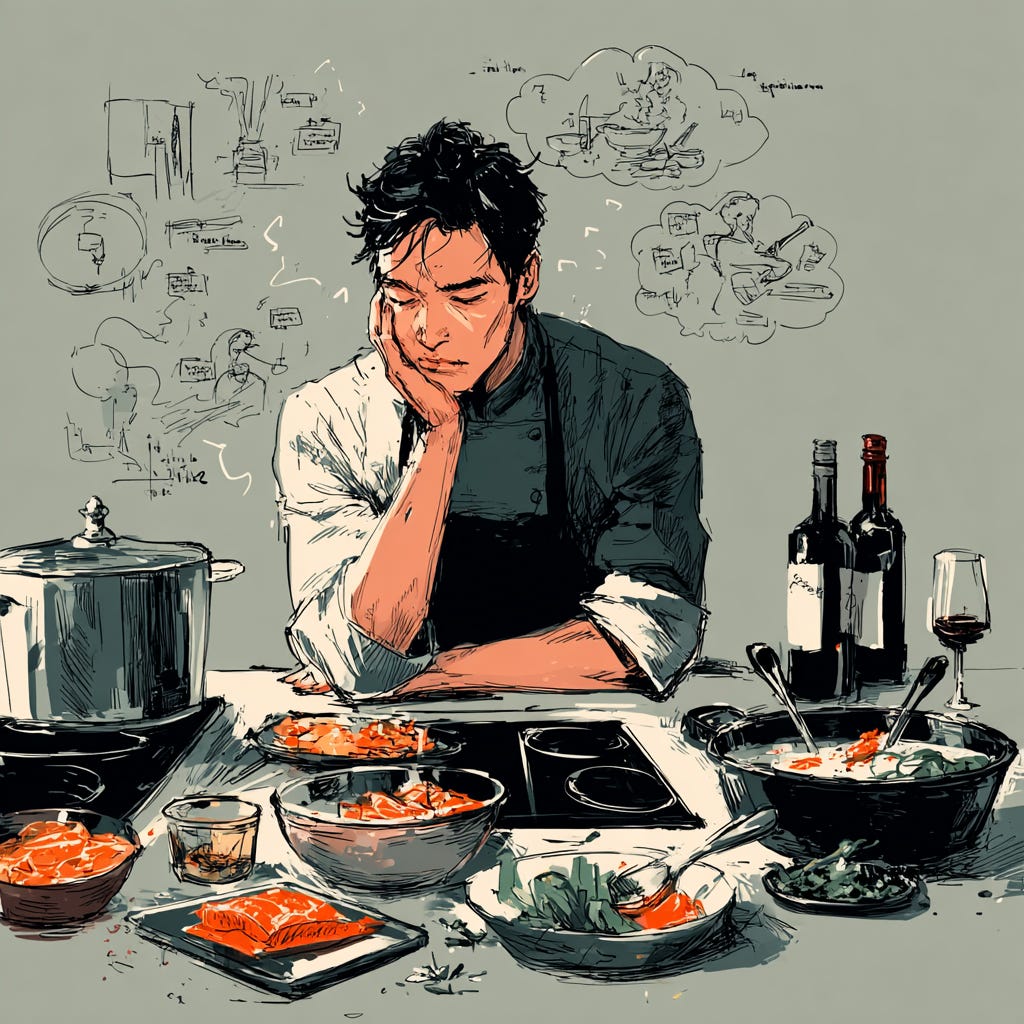
I am afraid your palate has been hijacked.
Modern food has trained you—trained all of us—to expect sweetness in everything. Your morning yogurt. Your salad dressing. Your tomato sauce. Even your bread contains sugar you didn’t ask for and probably didn’t taste consciously.
We’ve become a nation of sweet-seekers, avoiding bitterness like it’s medicine we’re forced to take. But here’s what the food industry doesn’t want you to know: bitterness is the taste of healing. And learning to crave it, no… like… really crave it, might be the most sophisticated act of dietary rebellion you can commit.
The Taste That Teaches
“Sour, sweet, bitter, pungent, all must be tasted.” That Chinese proverb has been around for millennia, but we seem to have forgotten the bitter part somewhere between the 1970s and now.
I learned about bitterness twice in my life.
The first time, I was eight years old with a stomach that wouldn’t settle. My mother, practical and unsentimental, handed me a small glass of neon orange bitters. Angostura. Straight. “Drink,” she said. It was awful. Medicinal. Sharp. And within ten minutes, my stomach calmed like she’d thrown a switch.
The second time was in Mexico, decades later. I’d eaten chili peppers that were not agreeing with me, (easy to do) with that burning, regret-inducing kind of disagreement. A local chef handed me a square of bitter chocolate. 70% cacao, barely sweetened. “Eat,” he said. I did. The burn subsided. The chocolate’s bitterness didn’t mask the problem; it resolved it. “Aha” moment ensues…
Bitterness, I realized, wasn’t punishment. It was information. And my body knew exactly what to do with it.
When Cancer Cleared My Palate
After cancer treatment, something strange happened. My sense of taste came roaring back, not just back to baseline, but better than I’d had in years.
It was like having cataracts removed. You don’t realize how diminished your senses have become until they’re restored. And what I tasted first, what I craved most, were bitter greens. Radicchio. Endive. Arugula with its peppery bite.
Chef Marco Pierre White once said, “A chef’s palate is born out of his childhood.” Maybe. But mine was reborn out of illness.
Post-cancer, my body wanted what it needed, and what it needed was bitterness.
The Cancer aftermath had stripped my gut lining. My liver was working overtime. My digestion was sluggish and inflamed. And my body, in its wisdom, demanded the very foods that would heal those systems: bitter greens, bitter roots, bitter herbs.
Dr. Michael Greger is right when he says, “As you eat more healthily, your palate changes, it’s amazing.” But here’s what he doesn’t emphasize enough: it changes whether you plan for it or not. Your body will start asking for what it needs. You just have to be quiet enough to listen.
Linda’s Story: When Fiber Alone Wasn’t Enough
Last fall, a reader named Linda wrote to me. She’d been dealing with diverticulosis for three years—those little pouches in the colon lining that can become inflamed if you’re not careful. Her doctor told her to eat more fiber. She did. Whole grains, beans, vegetables.
But she kept having flare-ups.
Then she read something about bitter foods supporting digestive health and decided to experiment. She started eating bitter greens, like kale, collards, and endive - three times a week. Within a month, her digestion stabilized. The inflammation quieted. She wrote: “I don’t know if it’s the fiber in the greens or the bitterness itself, but my gut finally feels calm.”
Here’s what Linda stumbled into: herbalists like Guido Mase and Jenna Volpe have been teaching this for years.
Bitter foods stimulate the entire digestive system.
From saliva production to bile secretion to gut motility. They’re not just adding bulk. They’re waking up your digestion at every level.
When you taste bitterness, your T2R taste receptors (yes, you have bitter receptors in your gut, not just your tongue) trigger a cascade: more digestive enzymes, better bile flow, reduced inflammation, improved gut barrier function.
This is January. Post-holiday season. Your liver is probably exhausted. Your digestion is probably sluggish. Your body is probably asking for something bitter, even if you don’t consciously hear it yet.
Why This Matters Now
We live in a culture that hides sugar everywhere and calls bitterness an “acquired taste,” as if that’s a bad thing.
But acquiring a taste is sophistication. It’s maturity. It’s the palate equivalent of painting on black gesso instead of white canvas; you’re choosing difficulty because it produces something deeper. I call that “working in the negative spaces.”
Bitterness is the same. It doesn’t flatter you with easy pleasure. It challenges you. And in that challenge, your palate grows up.
The modern American diet is a white canvas, sweet, bland, safe, forgettable. Bitterness is the black gesso. It demands more from you. And it gives more back.
Try This at Home
Start small. Don’t force yourself to love radicchio overnight. But add one bitter food to your week and pay attention to how your body responds.
Now, as you read these over, remember that Chef (me) would love for you to choose local, organic options and to know your farmers. Ah, yeah, well then life happens, huh? SO… hey, do the best you can. Make good choices, whole, real foods. I trust you!
Two recipes to begin:
Endive Gratin
Serves 4
Ingredients:
4 large endive heads, halved lengthwise
2 tablespoons olive oil
1 cup vegetable or chicken stock
2 tablespoons lemon juice
3 tablespoons grated Parmesan (or nutritional yeast)
Fresh thyme
Pinch of sea salt (go light—bitterness balances salt naturally)
Method:
Preheat oven to 375°F.
Brush endive halves with olive oil, place in baking dish cut-side up.
Pour stock and lemon juice over endive. Sprinkle with thyme and salt.
Cover with foil, bake 25 minutes.
Remove foil, sprinkle Parmesan, bake uncovered 10 minutes until golden.
The bitterness softens with heat but doesn’t disappear. That’s the point.
Grilled Radicchio with Saba (the secret weapon) and Goat Cheese
Serves 4
Ingredients:
2 heads radicchio, quartered through the core
Olive oil for brushing
2 tablespoons saba (or balsamic reduction)
2 ounces soft goat cheese, crumbled
Fresh cracked pepper
Method:
Heat grill or grill pan to medium-high.
Brush radicchio quarters with olive oil.
Grill 3-4 minutes per side until charred at edges, slightly wilted.
Arrange on plate, drizzle with saba, scatter goat cheese.
Finish with pepper.
The char adds smoke. The saba adds sweet-acid complexity. The goat cheese adds fat. But the radicchio’s bitterness stays center stage. That’s the lesson.
The Invitation
Bitterness isn’t the enemy. Sweetness as default is the enemy.
Your body knows this already. It’s been trying to tell you with cravings you’ve been trained to ignore. That pull toward dark chocolate. That inexplicable desire for black coffee. That curiosity about bitter greens you keep walking past at the market.
Listen.
Herbalists have known for centuries what modern medicine is finally catching up to: bitter herbs, like dandelion root, artichoke leaf, burdock, and gentian, all support liver function, improve digestion, and reduce systemic inflammation. Companies like Urban Moonshine and traditional herbalists like Guido Mase have built entire practices around this ancient wisdom.
You don’t need supplements (though bitters tinctures work beautifully). You need to start putting bitter foods on your plate. Regularly. Intentionally.
Because here’s the truth: a palate that can appreciate bitterness is a palate that’s complete. It’s stopped needing everything sweetened and softened. It can handle complexity. It can sit with difficulty. It can taste what’s real.
And in a world that’s constantly trying to make everything palatable, pleasant, easy—that’s an act of quiet rebellion.
Your move.
Check it out below 👇 We are getting together around the Intentional Table. Join us!
Until We Eat Again,
Chef Jonathan McCloud, M.A.
Author, THRIVE!

Resources:
Guido Mase, herbalist - “Bitters: Why herbalists love them and how they help digestion” (Herbal Reality)
Jenna Volpe, RDN, clinical herbalist - Best Herbal Bitters for Digestion (Wholistic Living)
Urban Moonshine - Organic digestive bitters and herbal tonics
What’s your relationship with bitter foods? I’d love to hear what you’re learning in the comments.
Join Us From Anywhere!
A Live, and Online Un-Cooking Class About
Raw Foods, Green Juice Cleansing, & Chocolate (of course)!
Hosted by:
New York Times Bestselling Author Lissa Rankin, MD,
Trotter Alumni Chef Jonathan McCloud, M.A.,
& Cleanse Expert Patricia Barrett
February 9th to March 13th, 2026 • Ten Workshop Sessions

Thank you! It’s hard to convince myself, others or heaven help me kids, that bitter is good for you. Yet, it’s an ancient tradition and a solid scientific answer. Nettle soup is a dream.
am loving your columns!!! arugula is one of my all-time favorite salad makings. am looking forward to making your recipes- thank you for the vegetarian versions. and i have a friend who is a fragile diabetic with digestive problems that i'm going to share your book and this column (and others) with.